
Simple Ways to Enjoy the Foods You Love While Keeping Your Gut in Mind
There is a lot to love about holiday food: the recipes we only make once a year, the dish someone always brings, the smell of something roasting while everyone gathers in the kitchen, and the dessert table that somehow becomes interesting again even after everyone insists they could not possibly eat another bite.
Holiday meals are meant to feel different from everyday meals. They are often richer, larger, later, and filled with foods we may not normally eat all at once. Add travel, changing sleep schedules, less movement, more snacking, and a few days away from your usual routine, and your digestive system may notice the holidays too.
That does not mean you need to rethink every family recipe. Often, digestive comfort is less about creating the perfect menu and more about making a few thoughtful choices that bring some balance to the table.
Sometimes It Is the Whole Meal, Not One Food
When a holiday meal leaves you feeling overly full or uncomfortable, it is easy to blame one particular ingredient. But sometimes it is simply the combination of everything arriving on the same plate.
Creamy potatoes, stuffing, gravy, casseroles, dessert, festive drinks, and second helpings can add up to a meal that is much richer and larger than what you eat on an ordinary day.
High-fat foods may feel heavier for some people, while larger meals, more sweets, alcohol, and a later dinner can make the entire eating pattern feel different.
The answer is not to remove all the foods you look forward to. It is simply to remember that portion size, richness, meal timing, hydration, movement, and your usual digestive routine can all play a role in how you feel afterward.
Let Your Favorite Foods Stay Your Favorite Foods
If your family waits all year for a certain stuffing recipe, make the stuffing. If mashed potatoes are non-negotiable, make them creamy. If there is a pie that has been on the table for twenty years, this probably is not the moment to reinvent it.
Instead, think about the meal as a whole.
A rich casserole can sit next to a simple green vegetable. A cheese-heavy appetizer can share the table with fruit, olives, nuts, or fresh vegetables. Sauces and dressings can be served on the side so everyone can choose how much they want.
Fresh herbs, citrus, toasted nuts, infused oils, and vinaigrettes can also bring plenty of flavor to simply prepared vegetables and proteins.
A comfortable meal does not need every dish to follow the same rules.
People Often Ask Us: What Does FODMAP Mean?
If you have seen the term Low FODMAP on Regular Girl or in conversations about digestive wellness, you may have wondered what all those letters mean.
FODMAP stands for:
Fermentable Oligosaccharides, Disaccharides, Monosaccharides, and Polyols.
Yes, it is quite a name.
FODMAPs are groups of short-chain carbohydrates found naturally in many everyday foods. Some people follow a Low FODMAP eating plan as part of an individualized approach to digestive wellness, which may involve paying closer attention to onions, garlic, wheat-based foods, some dairy products, particular fruits and vegetables, and certain sweeteners.
Holiday meals can be especially complicated because traditional recipes often combine several of these ingredients at once.
The good news is that Low FODMAP does not mean flavor-free, and it certainly does not mean everyone at the table needs an entirely different meal.
Build Flavor in Different Ways
Onion and garlic are the starting point for countless holiday recipes, but people following a Low FODMAP approach may use alternatives such as garlic-infused oil, chives, green scallion tops, fresh herbs, citrus, and spices.
Sage, rosemary, and thyme can bring familiar holiday flavor to stuffing and savory sides, while garlic-infused oil can work well in vegetables, potatoes, dressings, and marinades.
Dairy can also be adapted when needed. Lactose-free milk can work in mashed potatoes, while lactose-free yogurt or sour cream can be used in dips.
Sometimes a thoughtful substitution does not make a dish feel less traditional. It simply gives you another way to get there.
Give the Table Some Variety
One of the easiest ways to make a meal more comfortable for different digestive routines is simply to offer choices.
Hard cheeses, olives, crackers, vegetables, roasted nuts, deviled eggs, shrimp cocktail, grapes, berries, and simple salads can add variety without making anything feel like a “special diet” option.
Vegetables can help too. Holiday tables can become very rich, and very beige very quickly. Roasted carrots, green beans, leafy greens, or other seasonal vegetables can add freshness, color, and texture alongside the heavier dishes.
Giving people options often makes the table feel more generous, not more restrictive.
Portion Size Matters Too
Holiday meals make it remarkably easy to end up with every dish on the table piled onto one plate.
You want to taste everything. Someone insists you try their casserole. There are three kinds of potatoes. Suddenly your plate looks like it requires structural reinforcement.
Starting with smaller portions of the foods you are most excited about can make the meal feel a little more comfortable. You can always go back if you are still hungry.
Eating slowly and giving yourself some time between dinner and dessert can help too. The pie will still be there in twenty minutes.
This is not about restriction. It is about giving yourself enough time to enjoy what you are eating.
Keep the Everyday Basics in the Picture
Holiday routines can make simple habits surprisingly easy to forget.
Hydration is one of them. Cooler weather, travel, coffee, festive drinks, and busy schedules can all mean less water than usual.
Movement can disappear too. Long meals, car rides, flights, and afternoons on the couch can add up to much more sitting. You do not need to schedule a workout between dinner and dessert. A walk, playing with the kids, helping clean up, or stretching after a long drive all count.
And then there is your bathroom routine. Travel, houseguests, unfamiliar bathrooms, and packed schedules can make things feel less predictable. Try to give yourself enough time and pay attention when your body tells you it is time to go.
Your schedule may be on holiday. Your gut does not necessarily know that.
Keep Your Fiber Routine Familiar
Fiber is another everyday habit that can become less consistent when holiday meals replace your normal routine.
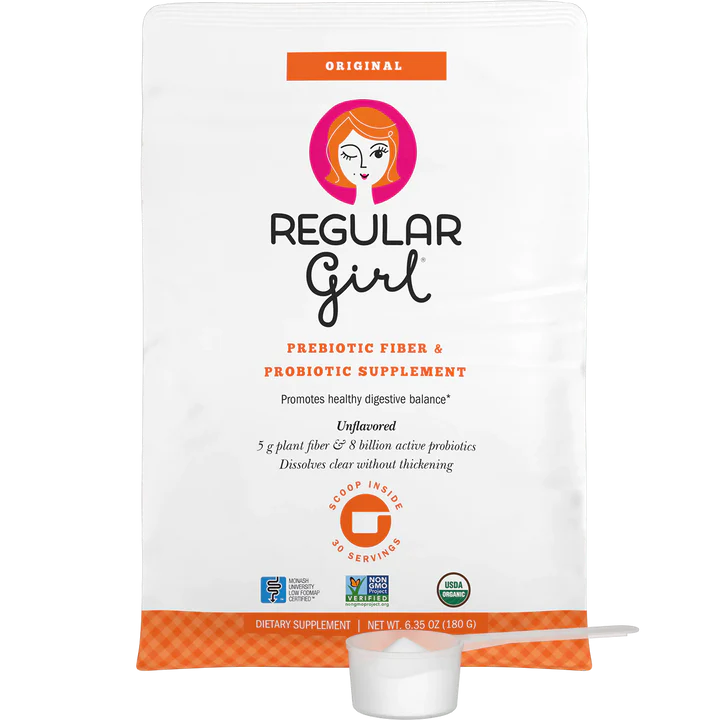
Regular Girl combines Sunfiber®, a soluble prebiotic fiber, with a probiotic to help support digestive health and regularity.*
It mixes clear without changing the taste or texture of the foods and beverages you already enjoy, so it can fit easily into water, coffee, smoothies, yogurt, oatmeal, or another favorite food.
Regular Girl is also Low FODMAP Certified, an additional consideration for people following an appropriate Low FODMAP eating plan.
The menu may change. Dinner may happen later than usual. Someone may convince you to try another dessert.
Your daily fiber routine can still be one of the familiar parts of your day.
Make It Easier for Everyone at the Table
If you are hosting, ask guests ahead of time whether there are foods they avoid. You do not need six versions of dinner. Knowing what people need can help you decide where a simple substitution or side option makes sense.
If you are a guest, offering to bring a dish you know you will enjoy can make things easier for everyone.
Most importantly, dietary choices do not need to become dinner-table conversation. The food should help bring everyone together, not make anyone feel singled out.
Enjoy the Holiday Meal
A holiday meal is not supposed to look exactly like the way you eat every other day of the year. That is part of what makes it special.
Enjoy the family recipe. Have the stuffing. Choose the dessert you wait all year for.
At the same time, a few everyday habits can still come along for the celebration. Drink water. Add some vegetables. Move a little. Pay attention to comfortable portions. Keep your fiber routine going.
The best holiday table is not the one with the most carefully controlled menu. It is the one where people feel welcome, favorite foods still taste like favorite foods, and everyone has something they can comfortably enjoy.
Because in the end, the best part of the holiday meal is still the people sitting around the table.
Keep Things Regular Through the Holidays
Regular Girl combines soluble prebiotic Sunfiber with a probiotic to help support digestive health and regularity.*
One simple daily scoop can help keep your fiber routine familiar, even when your holiday schedule looks anything but.
Because the holidays can be unpredictable. Your regularity doesn't have to be.
SHOP REGULAR GIRLDisclaimer:
*These statements have not been evaluated by the Food and Drug Administration. This product is not intended to diagnose, treat, cure, or prevent any disease.